This post may contain affiliate links.
I remember the moment I realized I had a problem.
It was a Saturday morning, and I was standing in the garage, staring at a pile of tents, sleeping bags, backpacks, and random carabiners that had somehow fused into a chaotic mountain of “I’ll deal with it later.” It wasn’t that I didn’t value my gear — in fact, it was the opposite. I had spent years carefully curating pieces I loved: the perfect tent, that cozy down sleeping bag, the kids’ backpacks that had survived countless campouts.
But my disorganization was slowly destroying everything I’d invested in. Zippers were snagging, tent poles were bending, sleeping bags were getting compressed beyond recognition — and my mental space was just as cluttered.
I knew it was time to make a change. I wanted a system that didn’t just look tidy but actually helped me protect and preserve our adventure gear for the long haul. So, I rolled up my sleeves, grabbed my coffee, and decided it was time to take back my garage.
When I first started organizing, I realized I didn’t need a Pinterest-perfect garage makeover — I needed a functional storage system that worked for a busy family. I started researching: how should sleeping bags be stored? What’s the best way to keep tents mold-free? How do you make sure your investment in quality gear actually lasts more than one season?
It turns out that proper storage is just as important as the gear itself. A good tent can last a decade if you dry it correctly and store it in a breathable bag. A down sleeping bag stays lofty if it’s stored uncompressed. Once I understood that, I stopped thinking of organization as a chore — and started seeing it as part of my outdoor lifestyle.
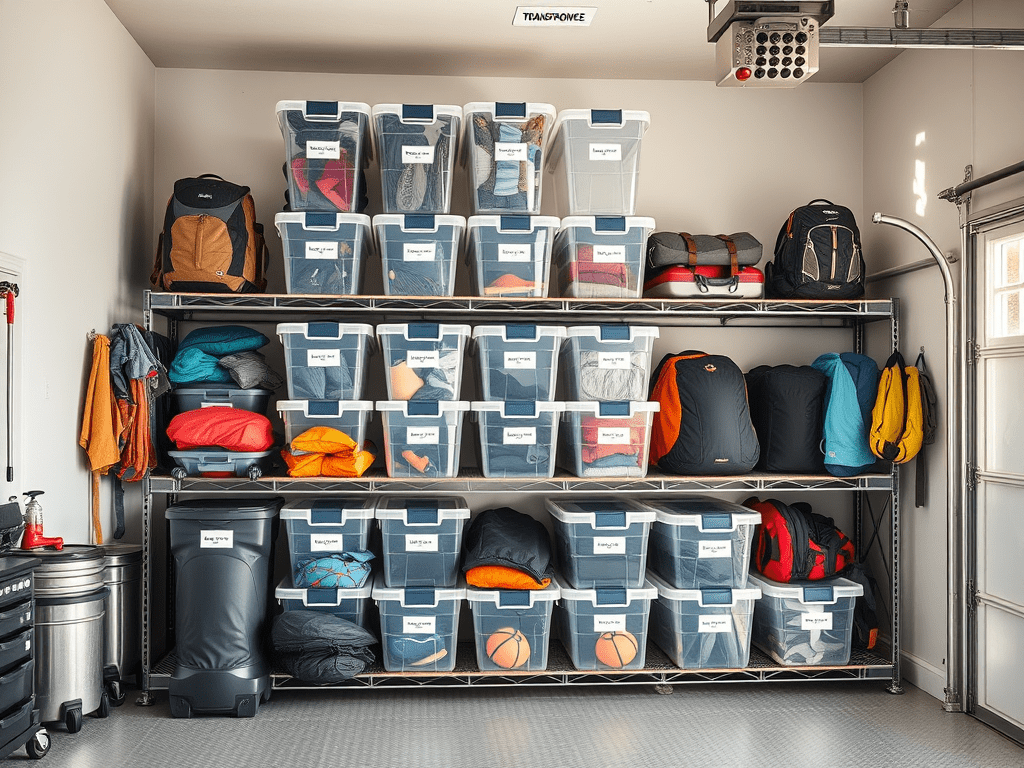
That shift in mindset made everything easier. I began with one simple rule: everything needs a home. The first tool that completely changed the game for me was this 6-Pack of Clear Storage Bins. I love these bins because they stack perfectly, keep dust and dirt out, and have a clean, minimalist design that makes the space instantly feel calmer.
Each person in the family gets their own bin (or two) labeled with their name. Inside, they store their personal essentials — their version of the Ten Essentials — plus smaller items like headlamps, gloves, and first-aid kits. Having individual bins meant no more guessing whose gear was whose, and no more digging through piles before every trip.
Once the bins were sorted, I needed a strong, simple way to store them. I invested in this Heavy-Duty Garage Shelf and honestly, it was a game-changer. It’s sturdy, easy to assemble, and can hold all six bins with extra space for larger items like tents and stoves. Every bin now has a designated spot, and bigger gear rests neatly above it. Even the kids know exactly where to put things after each trip — no more “Mom, where’s my sleeping pad?”
Sleeping bags were my next concern. For years, I’d kept them stuffed tightly in their compression sacks because that’s how we packed them for trips. But over time, I learned that long-term compression can actually damage the insulation, especially in down bags. That’s when I switched to using these Sleeping Bag Storage Bags. They’re breathable, roomy, and keep the bags lofted without taking up too much space.
I even tuck each sleeping bag’s stuff sack inside its storage bag so it doesn’t get lost — because there’s nothing worse than scrambling to find that tiny sack the night before a trip.
If you’re tempted to hang your sleeping bags in the garage, I’d skip it unless your space is very clean and temperature-controlled. Dust, pests, and temperature swings can do more harm than good. If you do prefer hanging, though, this Sleeping Bag Hanger is a solid option — just make sure the spot you choose is clean and consistent in temperature.
Another lesson I learned the hard way: never store anything damp. After rainy trips, I used to leave tents half-unrolled in the garage to dry “later.” Spoiler alert — “later” never came, and mildew did.
Now, I use a tent hanger or clothes rack to air-dry everything before storing it. If the weather’s bad, I set it up inside and let it dry overnight. It’s such a simple fix, but it’s saved me hundreds of dollars in gear replacements — and my garage no longer smells like a wet forest.
Today, my garage actually brings me joy. Every bin has its place, every piece of gear has a home, and I no longer feel overwhelmed before family trips. We can pack for a weekend adventure in about fifteen minutes, and I know our gear will last for years.
What started as a small act of organization has become an ongoing habit of care and mindfulness. It’s one less thing to stress about — and one more way I can enjoy the adventures that matter most.
If you’re feeling overwhelmed by gear chaos, start small. Pick one corner, one shelf, one bin. Build your system slowly. You don’t need fancy labels or color-coded perfection — just a structure that keeps your gear ready for what it was meant for: adventure.
And if you’re looking for ways to simplify your next trip even further, you might enjoy my post on How to Pack Light for a Family Camping Trip (Without Sacrificing Comfort) — it’s full of smart tips for keeping things simple without sacrificing the cozy essentials. Or, if you’ve ever wondered why the “Ten Essentials” somehow turn into “Thirty Essentials” when kids are involved, check out The Ten Essentials: Why It Feels Like the 30 Essentials at Times. Both pair perfectly with this storage system and can help you stay organized from home to trailhead.
 Moms Go Adventure | Camping Essentials, Hiking Gear in Boise ID