This post may contain affiliate links.
If January hits and you tell yourself, “This is the year we finally camp more,” you’re in the right place. Planning great trips doesn’t require a spreadsheet degree or a garage full of gear—it just needs a simple rhythm you can reuse every time.
Below is the exact 7-part system our family uses to plan a full year of camping—with kid chaos, school calendars, and Idaho’s wild weather all in the mix. It’s quick, repeatable, and flexible. I’ll show you the digital tools that actually help, the analog shortcuts that save sanity, and where to add a few small-but-mighty products (planner, packing cubes, portable charger) that keep everything humming.
The Big Picture: The “One Afternoon, Many Trips” Method
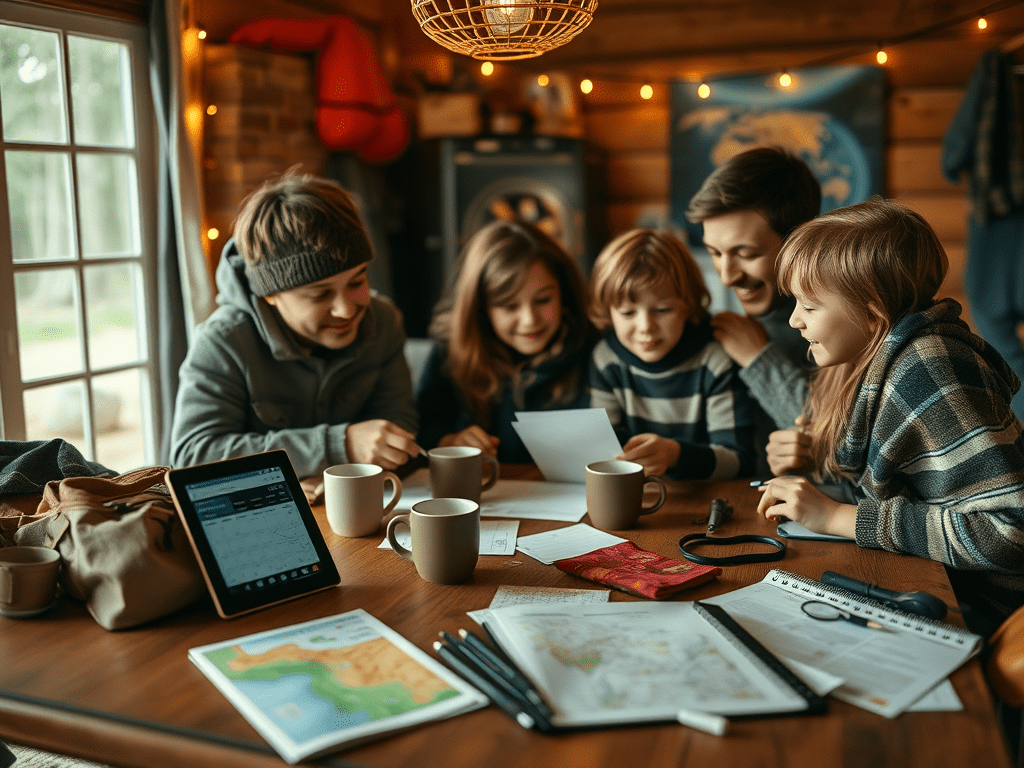
We do one planning session each January. Cocoa on the table, calendar open, everyone gets a say. In that single afternoon we:
- pick 3–5 anchor weekends (with backups),
- decide one stretch trip (road trip or national park),
- outline monthly micro-camps (overnight close to home), and
- set reminders for when reservations open.
That’s it. Details come later. The magic is giving those trips a place to live on the calendar before life fills it.
Warm-up reads:
• The Ten Essentials (and Why It Feels Like the 30 Essentials at Times)
• How a Simple Hike Taught Me to Stop Waiting for Permission
Step 1: Choose Destinations the Smart Way (not the hard way)
Start with regions, not exact campsites. That keeps you flexible and increases your chances of finding availability.
- Close-to-home wins (Treasure Valley): Bruneau Dunes State Park (sand-sledding + stargazing), Lake Cascade (family-friendly loops), Ponderosa State Park (shade + shore), Pine Flats or Kirkham Hot Springs (combine camping + soak), Bogus Basin area (cooler temps, shoulder-season quiet).
- Driveable long-weekends: Sawtooth NRA (Redfish, Stanley Lake), Craters of the Moon (otherworldly + easy), McCall/Payette National Forest (lakes, larches in fall).
How we pick quickly:
Open AllTrails to filter by mileage and elevation for kid-friendly hikes near your chosen region. Then open Recreation.gov or your state parks portal to see campsite options within 45 minutes of those trails. If a popular loop is full, look for nearby National Forest campgrounds or first-come/first-served areas—often just as lovely and less packed.

Step 2: Grab Sites Before They’re Gone (booking windows + alerts)
Most campgrounds open reservations 6 months out (some state parks open 9–12 months). Use this cheat sheet:
| Where you book | Typical window | What to do |
|---|---|---|
| Recreation.gov (NPS/USFS/Bureau) | ~6 months | Create a free account, heart/save campgrounds, set “notify me” alerts, try flexible dates. |
| State Parks (ID, OR, UT, WA) | 6–9 months | Bookmark your state portal; add a recurring reminder the 1st of each month to check new openings. |
| Private campgrounds / KOA | 6–12 months | Call if the site you want is blocked online—managers sometimes hold a few back. |
| Campendium / The Dyrt (research) | n/a | Scout lesser-known USFS/BLM campgrounds; read recent cell-service and road-condition reviews. |
Pro tip: hold two “good” weekends per trip on your family calendar (primary + backup). When something pops up (soccer tournament, weather), you already have an escape lane.
Step 3: Build a Reusable Trip Template (so planning takes under an hour)
Make one master trip template in Google Docs/Notion/Apple Notes and duplicate it each time:
Trip name & dates
Basecamp: (campground + site #)
Hikes/activities: 2–3 ideas with mileages
Weather window: highs/lows, sunrise/sunset
Meal plan: 2 breakfasts, 2 dinners, snacks
Packing reminders: refill fuel, s’mores kit, swimsuits, camp chairs
Safety notes: water source, fire restrictions, cell coverage
Reservations & codes: confirmation #, gate code, check-in times
Roles: who packs kitchen, who preps car, who handles firewood/ice
When you arrive, screenshot the doc to your phone for offline access.
Step 4: Use the Right Tools (digital + analog) — only what you’ll actually use
Digital stack (mom-approved, not overwhelming)
- Recreation.gov — reservations + alerts.
- ReserveAmerica / State parks portals — for Idaho + neighbors.
- AllTrails — trail filters, kid-friendly options, offline maps.
- Gaia GPS — reliable maps beyond cell service; download your area.
- Google Maps — build routes, add grocery/fuel stops; download the region offline.
- Roadtrippers — find quirky stops and scenic detours.
- NOAA / Weather.gov + Idaho 511 — check wind, temps, passes.
- Google Calendar — shared “Adventure Holds,” plus booking window reminders.
- Google Sheets — a simple gear checklist tab you copy for each trip (or keep it in your planner).
Analog helpers (so the trip still feels like an adventure)
- Camping planner — write the plan once, stop juggling sticky notes. → Camping Planner
- Packing cubes — color-code each kid; pajamas in one, outfits in another. → Packing Cubes
- Portable charger — one for phones, one for the lantern; we like a high-capacity model with two USB ports. → Portable Charger
- Paper maps — keep one in a waterproof sleeve for trail turnoffs and picnic table planning. → Waterproof Map Case
- Sharpie + painter’s tape — whip up quick labels on bins and coolers.
Step 5: Pack Once, Camp Often (the three “base kits”)
We keep three totes that live in the garage so weekend departures are 20 minutes, not two hours:
1) Kitchen
Stove + fuel, pot/pan, lighter + matches, spatula, cutting board, dish kit (soap + sponge + towel), trash bags, coffee setup, foil/spices, wipes, ziplocs.
2) Sleep
Tent + footprint, mallet/stakes, headlamps with fresh batteries, sleeping pads + bags, repair tape, small broom/dustpan, extra socks + beanies.
3) Safety/Day
First aid, blister kit, sun + bug spray, water filter or purification tabs, emergency blanket, maps + compass, paracord, small multitool, extra snacks.
Where your affiliates slot in smoothly:
- Planner rides in the top of the kitchen tote with a pen + highlighter.
- Packing Cubes live in each person’s duffel; everyone packs their own (you still check it—mom’s superpower).
- Portable Charger tucks into the day kit, charged before every trip; label the cord and throw in a second cable for a lantern or headlamp.
Step 6: Plan One Great Day + One Backup (that’s enough)
Perfectionism kills trips. You only need a Plan A and Plan B:
- Plan A: simple “destination” hike with a wow-factor (water, view, meadow). Bring a lunch you can eat at the turnaround point.
- Plan B: nature center, short interpretive trail, lake shore time, hot springs, or a town park with a great bakery. (Always know where coffee lives. Always.)
We like trails with water for play, shade for rest, and a treat at the end (cookies, cocoa, or a dangling hot springs stop on the drive home).
Step 7: The Post-Trip Debrief (5 minutes that makes everything easier)
On the drive home ask:
- “What was everyone’s favorite part?”
- “What would we change next time?”
- “Where do we want to go next?”
Jot it in your planner or shared doc. Record the site number, whether the wind was a factor, and what layers were perfect. Those notes turn into gold next season.
The Only Three Products I Recommend for Stress-Free Planning
I’m a mom, not a gear collector. These three earn their space:
- Camping Planner — keeps dates, packing lists, site numbers, and your post-trip notes in one place → Camping Planner
- Packing Cubes — one per family member; pack in outfits; dirty clothes go back in the same cube → Packing Cubes
- Portable Charger — high capacity with dual ports so you can top off a phone and lantern at once → Portable Charger
They’re small, affordable upgrades that remove 80% of the friction.
Every great camping season starts with one simple plan — not a perfect one, just one that gets you out the door. You don’t need fancy gear or endless free time; you just need a few clear weekends, a little prep, and the willingness to start. What I’ve learned after years of planning (and re-planning) is that the best trips rarely go exactly as expected — and that’s what makes them unforgettable.
So pour yourself a mug of coffee, open your calendar, and mark your first adventure weekend. When the tent goes up, the fire crackles, and your kids are chasing fireflies in the twilight, you’ll know it was worth every list, reminder, and backup plan.
Because the memories don’t come from perfect plans — they come from saying “yes” to going anyway.
 Moms Go Adventure | Camping Essentials, Hiking Gear in Boise ID