This post may contain affiliate links.
If January rolls around and you find yourself saying, “This is the year we finally camp more,” you are absolutely in the right place. Planning a full season of family camping does not require a color-coded spreadsheet, a giant gear room, or a perfectly free calendar. It just takes a simple system you can repeat every year.
This is the exact 7-step rhythm our family uses to plan an entire year of camping with kids, school schedules, changing weather, and the realities of everyday life all mixed in. It is flexible, realistic, and easy to reuse. I am sharing the digital tools that actually help, the analog shortcuts that save my sanity, and a few practical products that make planning and packing so much easier.
The Big Picture: The “One Afternoon, Many Trips” Method
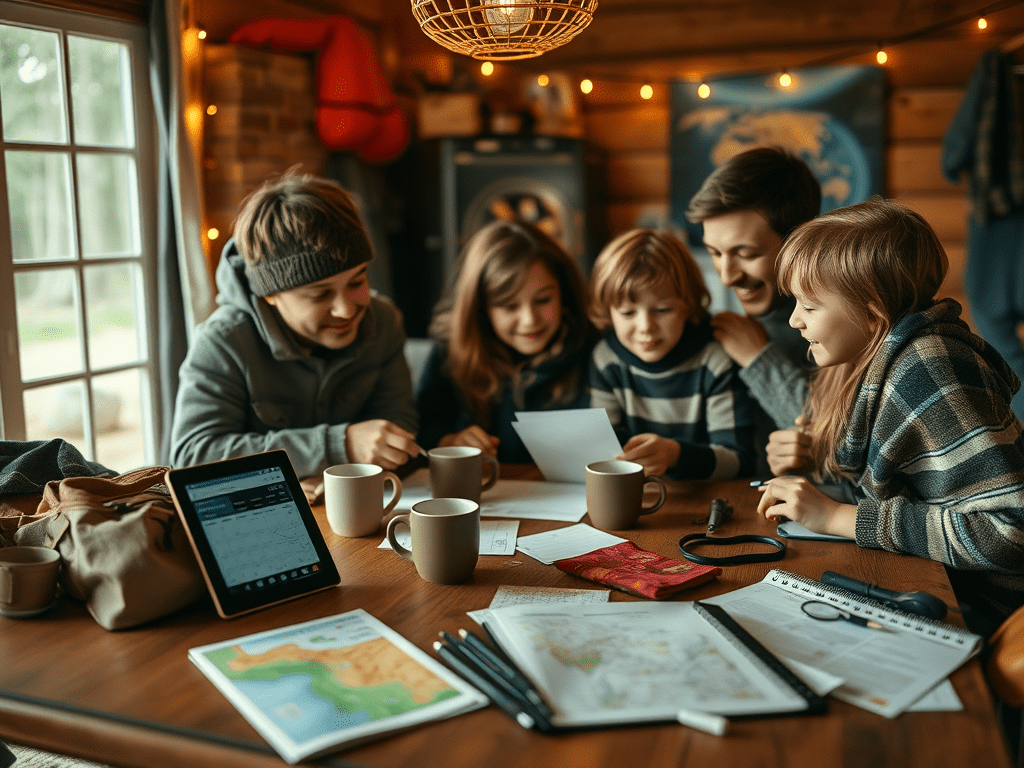
Every January, we do one family planning session. Nothing fancy. Usually there is coffee or cocoa on the table, a calendar open in front of us, and everyone gets to throw out ideas. In one afternoon, we map out the bones of our camping year:
- Choose 3 to 5 anchor weekends with backup options.
- Pick one longer stretch trip, like a road trip or national park adventure.
- Sketch out monthly micro-camps that are close to home and easy to pull off.
- Set reservation reminders before the best sites disappear.
That is the heart of it. The details can come later. What matters most is getting those adventures onto the calendar before life fills every open space.
Warm-up reads:
• The Ten Essentials (and Why It Feels Like the 30 Essentials at Times)
• How a Simple Hike Taught Me to Stop Waiting for Permission
Step 1: Choose Destinations the Smart Way, Not the Hard Way
When I am planning out a camping season, I start with regions, not exact campsites. That one shift keeps the process from getting frustrating fast. It gives you room to pivot if a campground is full, the weather changes, or you decide your family needs something different.
For families in southern Idaho, that might mean starting with a few proven favorites:
- Close-to-home options near the Treasure Valley: Bruneau Dunes State Park for sand sledding and stargazing, Lake Cascade for easy family adventures, Ponderosa State Park for shade and lakeshore exploring, Pine Flats or Kirkham Hot Springs for a camping-plus-soak kind of weekend, or the Bogus Basin area for cooler temperatures and quieter shoulder-season camping.
- Driveable long weekends: Stanley and the Sawtooth National Recreation Area, Redfish Lake, Stanley Lake, Craters of the Moon, McCall, and campgrounds in the Payette National Forest.
My fastest planning method is simple: first, look at hikes and activities your family will actually enjoy. Then match them with camping options nearby. I usually begin by checking trails near a region, then seeing what campgrounds sit within a reasonable driving distance. If one popular campground is already booked, I look for nearby Forest Service campgrounds or less-hyped alternatives that still give us the same access to the experience we want.

Step 2: Grab Campsites Before They Are Gone
One of the easiest ways to make camping season feel less stressful is to understand booking windows ahead of time. Most public campgrounds release reservations about six months out, while some state park systems open even earlier. If you know when sites are released, you do not have to rely on luck.
| Where you book | Typical window | What to do |
|---|---|---|
| Recreation.gov | About 6 months | Create a free account, save favorite campgrounds, and set alerts for your target dates. |
| State Parks portals | About 6 to 9 months | Bookmark your preferred state systems and add reminders to check new release dates. |
| Private campgrounds and KOA | About 6 to 12 months | Call directly if a site looks unavailable online. Sometimes the best information is still from a real person. |
| Campground research platforms | Varies | Use them to compare campground conditions, road access, and recent family-friendly reviews. |
One small planning trick that helps us every single year is holding two possible weekends for each trip on the family calendar: one primary weekend and one backup. That way, if school events, smoke, weather, or illness derail the first plan, we already have a second option ready to go.
Step 3: Build a Reusable Trip Template
The more trips you take, the more helpful it becomes to stop reinventing the wheel every single time. I keep one reusable trip template and duplicate it for each adventure. It takes so much of the mental load out of planning.
Your template can be simple, but it should include the basics:
Trip name and dates
Basecamp: campground name and site number
Hikes and activities: two or three realistic options
Weather window: expected highs, lows, and any seasonal quirks
Meal plan: breakfasts, dinners, easy lunches, snacks
Packing reminders: fuel, swimsuits, camp chairs, extra layers, s’mores supplies
Safety notes: fire restrictions, water access, trail conditions, cell service
Reservations and codes: confirmation numbers, gate codes, check-in details
Family roles: who packs the kitchen tote, who loads the car, who handles ice and firewood
Once that template exists, future trips take far less time to plan. You are just swapping out details instead of starting from scratch. Before we leave, I always make sure the key trip details are easy to access from my phone in case service disappears.
Step 4: Use the Right Tools, Not All the Tools
You do not need a dozen apps and a military-style planning board to have a great camping season. You just need a handful of systems that support your family without making everything more complicated.
Digital tools that actually help
- Reservation platforms for public campgrounds and state parks.
- Trail apps for finding kid-friendly hikes and filtering by mileage or elevation.
- Offline map tools for areas beyond reliable cell service.
- Google Maps for fuel stops, grocery runs, and downloaded regional maps.
- Weather and road condition tools to check temperatures, wind, and mountain passes before you go.
- Shared digital calendars for booking reminders, trip holds, and school schedule conflicts.
- Simple packing lists that can be duplicated and reused.
Analog helpers that keep the process sane
- Camping planner for keeping dates, gear lists, site notes, and post-trip reflections all in one place. Camping Planner
- Packing cubes to organize each family member’s clothing without digging through duffels every five minutes. Packing Cubes
- Portable charger for keeping phones, headlamps, and small camp essentials powered up. Portable Charger
- Waterproof map case for paper maps, trail directions, and campground notes when conditions get wet or windy. Waterproof Map Case
- Sharpie and painter’s tape for quick labels on bins, coolers, and camp kitchen supplies.
I love digital convenience, but I have learned that a few physical systems make family camping run so much more smoothly. A real planner, organized bags, and a dependable charger go a long way when everyone is asking you where their socks, snacks, or flashlight ended up.
Step 5: Pack Once, Camp Often With Base Kits
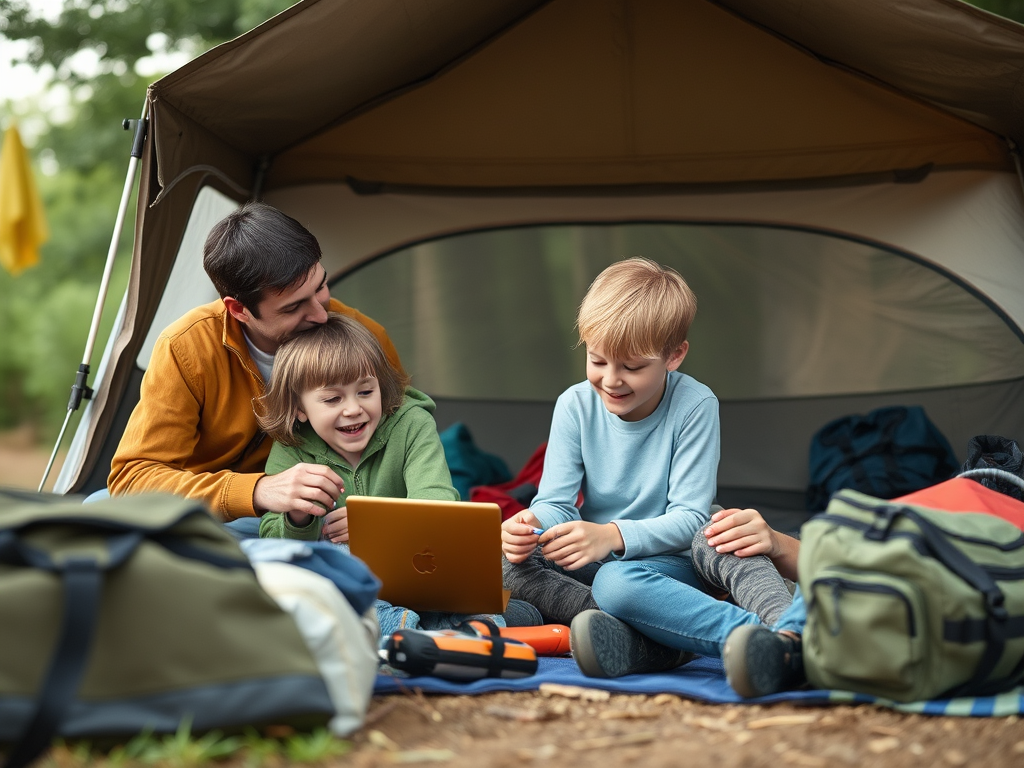
We keep three ready-to-go camping kits in the garage so getting out the door feels possible, even on a Friday afternoon. This is one of the biggest reasons our trips happen more often. When the basics are already packed, you are not rebuilding your camping life from the ground up every time.
1. Kitchen kit
Camp stove, fuel, lighter, cooking pot or pan, utensils, cutting board, dish soap, sponge, towel, trash bags, coffee setup, foil, spices, wipes, and food bags.
2. Sleep kit
Tent, footprint, stakes, mallet, sleeping bags, sleeping pads, headlamps, spare batteries, repair tape, small broom, and extra warm layers.
3. Safety and day-use kit
First aid supplies, blister care, sunscreen, bug spray, water filter or purification tablets, emergency blanket, trail map, compass, cordage, multitool, and easy snacks.
These are also the places where a few practical products fit naturally into the system:
- The Camping Planner lives at the top of our planning supplies so I can grab dates, notes, and checklists quickly.
- Packing Cubes stay in each person’s duffel and make it much easier for kids to keep track of their own clothing.
- The Portable Charger goes straight into our day-use kit, fully charged before every trip.
Step 6: Plan One Great Day and One Backup
This is the part that saves me from overplanning. For each trip, I aim for one really good adventure day and one easy backup option. That is enough. You do not need a jam-packed itinerary to create a memorable weekend.
- Plan A: a simple destination hike with something rewarding at the end, like water, a view, a meadow, or a lake.
- Plan B: a shorter interpretive trail, a lakeshore afternoon, a nature center, a scenic drive, hot springs, or a small town stop with a bakery and hot drinks.
My favorite family adventures almost always include three things: water to play near, shade to rest in, and a treat at the end. It does not have to be complicated to feel special.
Step 7: Do a Five-Minute Post-Trip Debrief
Before the trip fully disappears into laundry and unpacking, take five minutes and ask a few simple questions on the drive home:
- What was your favorite part?
- What would we do differently next time?
- Where do we want to go next?
I jot those answers down in my planner because they become incredibly useful later. Site numbers, wind exposure, the temperature at night, which meals were easiest, which layers actually got worn, and whether a campground felt restful or crowded all become part of next year’s planning wisdom.
The Only Three Products I Recommend for Easier Camping Planning
I am not interested in buying gear just to buy gear. I want practical tools that remove friction and make family adventures easier to pull off. These three do exactly that:
- Camping Planner for organizing dates, packing lists, campground details, and post-trip notes in one place.
- Packing Cubes for keeping each person’s clothes simple, visible, and easy to repack.
- Portable Charger for keeping essential devices powered without last-minute scrambling.
They are small upgrades, but they solve the kinds of everyday problems that can make the difference between a trip feeling manageable and a trip feeling exhausting.
Every great camping season starts with one simple decision: making space for it before the year gets too full. You do not need perfect gear, endless free weekends, or an elaborate planning system. You just need a few realistic dates, a little preparation, and the willingness to begin.
What I have learned over the years is that the best trips rarely go exactly according to plan. There is usually a little weather, a little chaos, a little improvising, and at least one moment where everyone is dirtier than expected. But somehow those are the weekends we remember most.
So pour yourself a cup of coffee, open your calendar, and mark your first camping weekend. Because the magic is not in planning the perfect trip. It is in saying yes to the adventure anyway.
 Moms Go Adventure | Camping Essentials, Hiking Gear in Boise ID