
This post may contain affiliate links.
Every January, I say it: “This is the year we’ll get outside more.”
I say it with confidence. With ambition. With that fresh-calendar energy that makes anything feel possible.
Then school projects happen. Someone catches a cold. The weather turns weird. The camping gear stays in the garage just a little too long… and suddenly it’s October, and we’re wondering where the year went.
For a long time, I thought the problem was time. I thought we just needed a longer weekend, fewer commitments, better weather, more money, or perfectly aligned schedules.
But last year, something shifted.
We stopped treating family adventures like giant, perfectly orchestrated vacations — and started treating them like small, intentional plans we could actually follow through on.
What surprised me most? It wasn’t about finding more time.
It was about building a simple system.
A rhythm. A structure. A few tools that turned “someday” into a date on the calendar.
So here’s exactly how we’re planning our family’s 2025 adventures — the mindset, the tools, and the small habits that are finally helping us live the adventure we talk about all year long.
Step 1: Dream Before You Plan
Every January, we host what we now call “Family Adventure Night.”
It’s not elaborate. No vision boards. No spreadsheets.
Just cocoa in mugs (mine lives in a Hydro Flask mug that has officially become part of my personality) and snacks scattered across the table.
The rule is simple: dream first, logistics later.
No budgets. No “that’s too far.” No “we don’t have time.”
We ask three questions:
- What adventures sound fun this year?
- How often do we realistically want to go?
- What’s one new thing we’ve never tried before?
One year my son said, “Climb a sand dune.” My daughter said, “See a giant waterfall.” That’s how Bruneau Dunes and Shoshone Falls made the list.
I write everything down in our notebook. The kids sketch theirs in their Adventure Journal — sometimes drawing detailed campsite maps, sometimes just doodling stick figures next to a tent.
It’s loud. It’s chaotic. It’s messy.
And it sets the tone for the entire year.
Because when everyone has input, everyone feels invested.
Step 2: Choose a Few “Anchor Adventures”
We used to overplan.
Ten trips. Fifteen weekend ideas. Color-coded goals.
Half never happened.
Now, we choose three anchor adventures each year.
These are the bigger commitments — the trips that require reservations, longer drives, or extended weekends.
For 2025, ours look like this:
- A long weekend in the Sawtooths
- A camping trip at Bruneau Dunes
- A summer road trip somewhere new (we’re eyeing Glacier National Park)
That’s it. Three.
Everything else becomes what we call micro-adventures — smaller, lower-pressure outings that don’t require months of planning.
- Sunday morning at Bogus Basin
- Evening walks along the Boise River Greenbelt
- Backyard s’mores nights
- Sunset picnics at Lucky Peak
The magic is in mixing both. Big memories. Small moments.
We track them on our Scratch-Off National Parks Map. Watching the foil disappear is oddly satisfying — like physical proof that we’re actually doing the thing.
It’s become a visual reminder that adventure doesn’t have to be extravagant. It just has to be intentional.

Step 3: Put It on the Calendar (Before Life Fills It)
This is the step most families skip.
If it’s not on the calendar, it won’t happen.
We treat adventure weekends like appointments. They go on our shared calendar months ahead — in bright green.
Even if we don’t know the destination yet, we block the date and label it “Adventure Weekend.”
That simple placeholder changes everything.
Soccer tournaments can’t take it. Birthday parties have to work around it. Work commitments get adjusted.
We also schedule backup dates. Because life happens. Weather changes. Someone inevitably gets sick.
Having a Plan B weekend already reserved has saved us from saying “maybe next month” more times than I can count.
Adventure doesn’t need perfect timing — it just needs a protected window.
Step 4: Use Tools That Keep It Simple
I used to overcomplicate everything.
Too many apps. Too many lists. Too many scattered notes.
Now I stick with a small set of tools that keep planning efficient and low-stress.
My must-haves:
- Camping Planner – My central hub for campsite confirmations, packing lists, and trip notes.
- Packing Cubes – Each kid has their own color. It reduces packing chaos instantly.
- Waterproof Map Case – Keeps trail maps, permits, and scribbled kid drawings safe and dry.
- Scratch Map – Keeps the long-term vision alive.
Digital helpers matter too:
- Recreation.gov for campsite alerts
- AllTrails for hike research
- Roadtrippers for mapping scenic drives
- Google Calendar for shared planning
- NOAA Weather and Idaho 511 for real-time conditions
Blending paper planning with digital convenience gives me structure without overwhelm.
Step 5: Build Reusable Base Kits
This is the single biggest game-changer in our adventure planning.
Pre-pack once. Reuse forever.
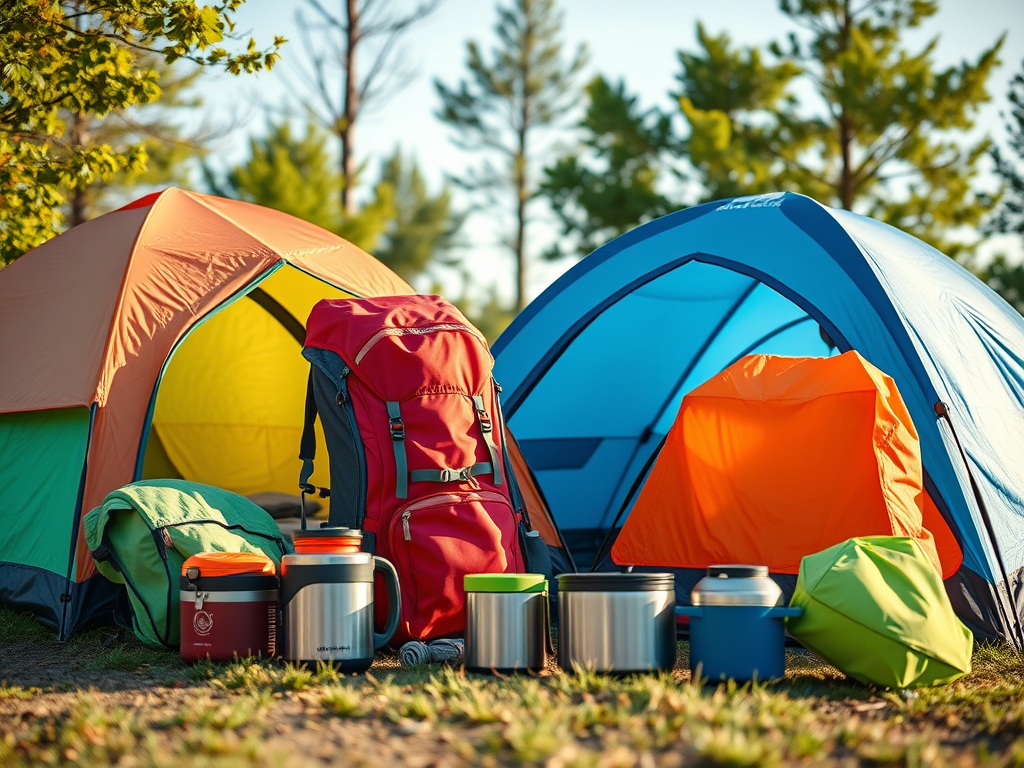
We keep three labeled bins in the garage:
- Kitchen (camp stove, utensils, coffee gear for my Hydro Flask mug)
- Sleep (tent, sleeping pads, headlamps, pillows)
- Safety (first aid kit, flashlights, extra socks, emergency snacks)
After every trip, I restock before storing them away.
That way when a sunny weekend appears, we grab the bins, toss clothes into our packing cubes, and go.
No reinventing the wheel. No last-minute panic packing.
It reduces friction — and friction is the enemy of follow-through.
Step 6: Plan Smart (Not Perfect)
Most of our trips come together in under an hour.
- Choose a destination (AllTrails shortlist).
- Check NOAA weather.
- Book the site (Recreation.gov).
- Map the route (Roadtrippers).
- Drop confirmations into our Camping Planner.
That’s it.
No binders. No complicated itineraries.
Just enough structure to make it doable — not overwhelming.
Step 7: Reflect and Build the Story
On the drive home, I always ask:
- What was your favorite part?
- What should we do differently next time?
- Where do we want to go next?
I write their answers in our Adventure Journal.
Five minutes of reflection turns a weekend into a memory.
It also makes the next adventure better.
Internal Reads That Make This Even Easier
- How to Pack for a Family Camping Trip (Without Losing Your Mind)
- How to Keep Your Camping Gear Fresh, Clean, and Ready All Year
What Planning Adventures Has Taught Me
Adventure doesn’t happen because you hope for it.
It happens because you make space for it.
It’s writing the weekend down in green ink.
It’s keeping the bins stocked.
It’s saying yes to the short hike instead of waiting for the perfect trip.
When I look back, I don’t remember the logistics.
I remember the sound of the river at 2 a.m. The way the tent glows at sunrise. The sticky marshmallow fingers.
If you’re feeling stuck this year, start small.
Pick one weekend. One trail. One micro-adventure.
Pour your coffee into that Hydro Flask mug, open your calendar, and give adventure a date.
Because the best memories rarely happen by accident — they happen when we protect the space for them.
 Moms Go Adventure | Camping Essentials, Hiking Gear in Boise ID